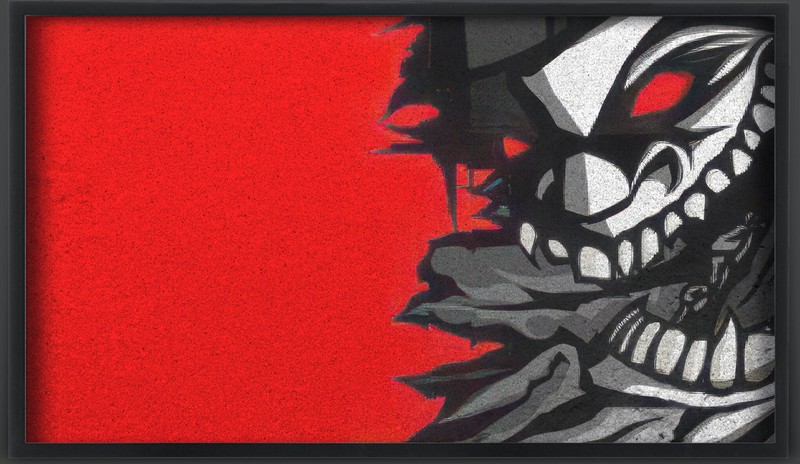


Brazilian Space Program
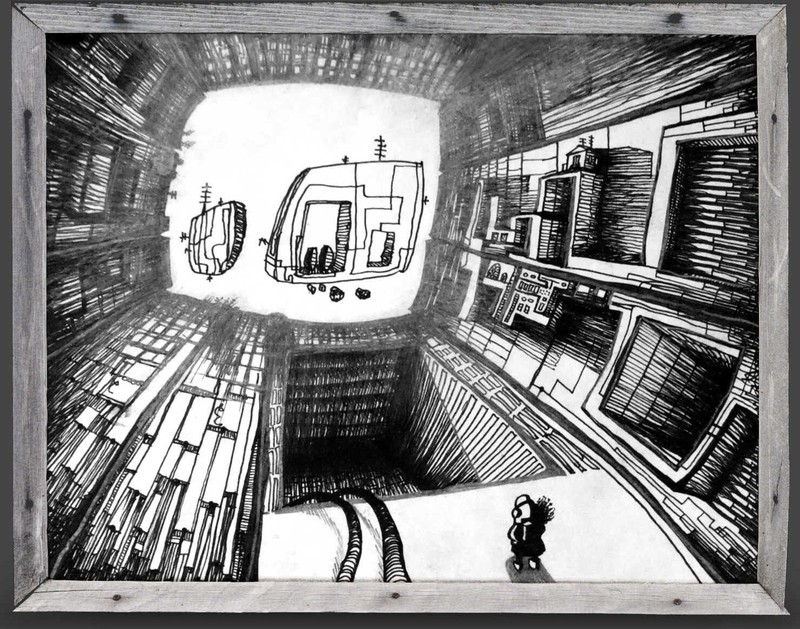
Digital Painting, 2009
- Role
- Digital painting & art direction
- Target
- One painted image that carries a whole speculative premise: what a Brazilian luxury destination on the moon would look like, furnished by the culture that actually exists
- Constraints
- 2009 · self-directed · a single frame, no accompanying fiction to lean on — the worldbuilding has to survive inside the picture
- Force fielded
- Nick Charney Kaye — digital painting and art direction
- Time-to-dispatch
- Painted April 2009
- Result
- A speculative-design painting in the studio archive, and an early instance of the method the A.P.E.S. universe later ran at property scale: take a real culture's actual economics, push it off-world, and let the furniture do the satire
- Principal
- Outright Mental (self-directed)
- One frame, one premise studio archive · speculative designArchival · 2009
While greatly influenced by African and Indigenous American traditions, and the cultures of Italian, Spaniard, German, Japanese and other European immigrants, three centuries of Portuguese colonization have ensured that a majority of what the world knows as Brazilian culture is right from Portugal— the language, foods like rice and beans and feijoada, a penchant for decadence, and colonial architecture.
We wonder how Brazilian culture might manifest in a luxury destination on the moon.
The inheritance: three centuries of Portuguese colonization, layered over African and Indigenous American traditions and a century of immigration.
The tell: colonial architecture. A culture exports its porches before it exports its engineering.
The register: decadence, sincerely meant. This is a luxury destination, not a research station.
The method: take a real culture's real economics, move them off-world, and let the furniture make the argument.
Why speculative design starts with the interior
Most space illustration answers a hardware question — what does the ship look like, how big is the dome. That is the least interesting thing about a settlement. Every off-world place anyone ever actually lives will be furnished by somebody’s grandmother’s taste, financed by somebody’s national economy, and decorated in a style that was already old on Earth.
So the painting skips the rocket and goes straight to the destination: what gets served, what gets built in, who the place is for. The satire is quiet and it is affectionate — the future does not arrive scrubbed of the past, it arrives carrying every habit it could afford to ship.
That instinct is two decades old in this studio and still running. The IAR-76 spread worked the same way — worldbuilding proven by its parts list — and the A.P.E.S. universe does it at property scale now: an orbital-mining monopoly whose propaganda posters are the real set dressing.
We question narratives — including our own, says the manifesto. The narrative under examination here is the one every space rendering quietly tells: that going off-world makes a culture generic. It does not. It makes it portable, and this painting takes the portable version seriously enough to plate it.
Record: a self-directed painting, never printed, never sold — proof: [], because there is nothing external to verify and the page will not pretend otherwise. The image above is the whole of it.