

Agendar™ App
Interactive, 2020
- Role
- Concept & engineering
- Relationship
- Live and unchanged since 2020 — six years of uptime with nothing to maintain
- Target
- A heads-up display for being on time — for a person in deep focus who needs to surface for a meeting without being a second late
- Constraints
- 2020, the first year of meetings-from-anywhere · no server anywhere in the path — the browser talks to Google Calendar directly, so the studio never holds a user's data · completely free, which means it has to cost nothing to run or it does not survive
- Force fielded
- Nick Charney Kaye — concept and engineering
- Time-to-dispatch
- Live at agendar.outright.io in October 2020; the same browser-side sign-in still works today
- Result
- A free, serverless heads-up display for upcoming calendar events — sign in with Google, see what's coming, and nothing about it ever reaches the studio. Running continuously for six years, which is the only durability claim worth making about software
- Principal
- Outright Mental (self-directed)
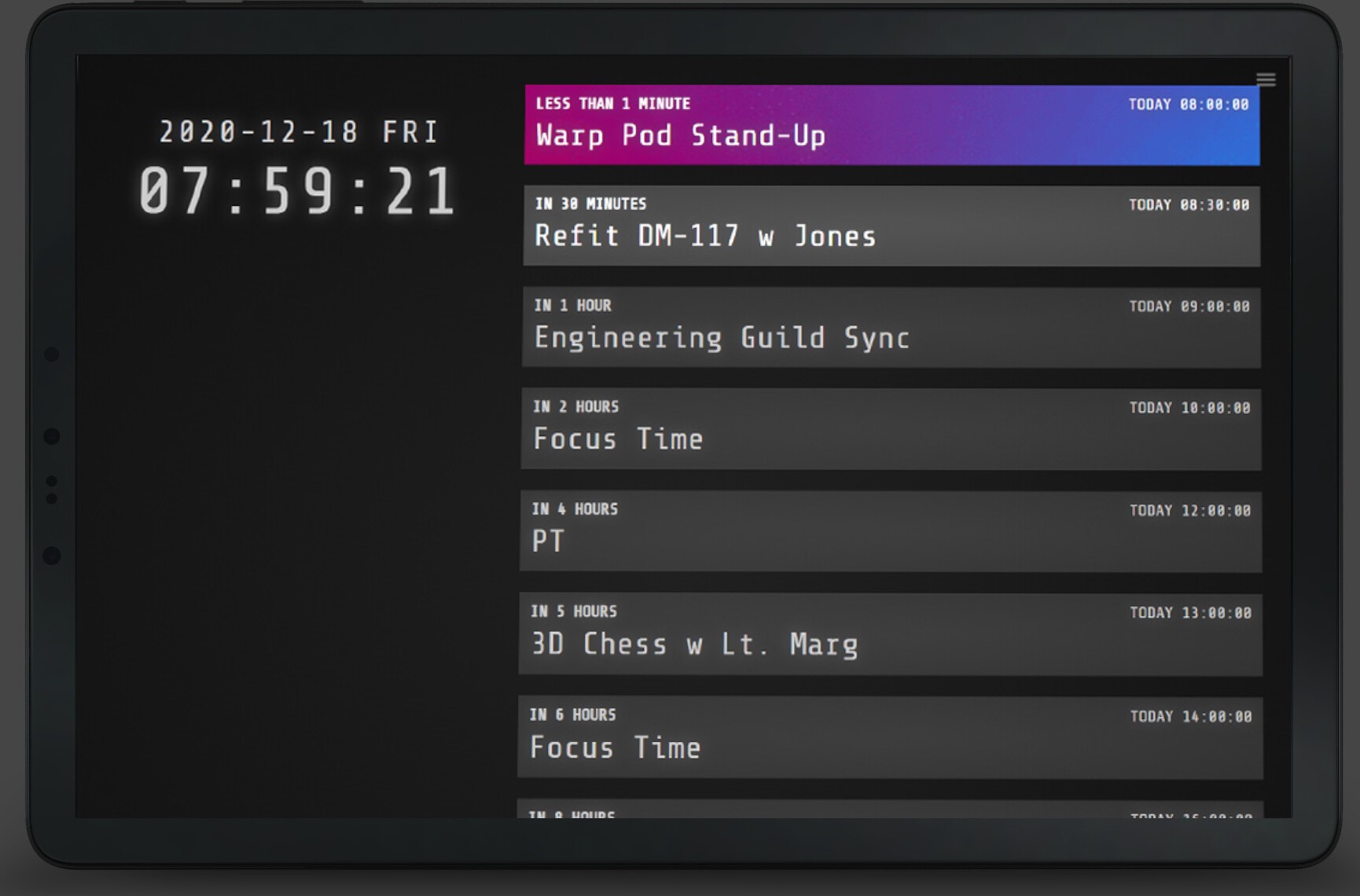
Heads-Up Display app for being on time.
In a world of remote meetings, challenges arise between the focus of working without distraction, and showing up on time for events.
It may be especially challenging for a person using a computer to shift gears from deep focus without being a second late.
It’s COMPLETELY FREE TO USE at agendar.outright.io— just login with Google to display your Calendar events.
How you sign in: Google, in your own browser.
Where your data goes: from your browser to Google Calendar. That is the entire path.
Servers in the middle: none. There is nothing for the studio to read, store, or lose.
Price: free. Not free-for-now — free because it costs nothing to operate.
Running since: 2020.
We never access your information! Your browser will connect directly to Google Calendar in order to display upcoming events in a unique way.
Why a thing this small has lasted six years
Longevity in software is almost never a feature of the code. It is a feature of the dependencies: every service in the path is a future outage, a future price change, and a future migration someone will have to do on a Thursday. Agendar has none. There is no backend to keep patched, no database to migrate, no vendor whose roadmap can end the product, and no per-user cost that grows with adoption. The browser talks to Google and the studio is not in the conversation.
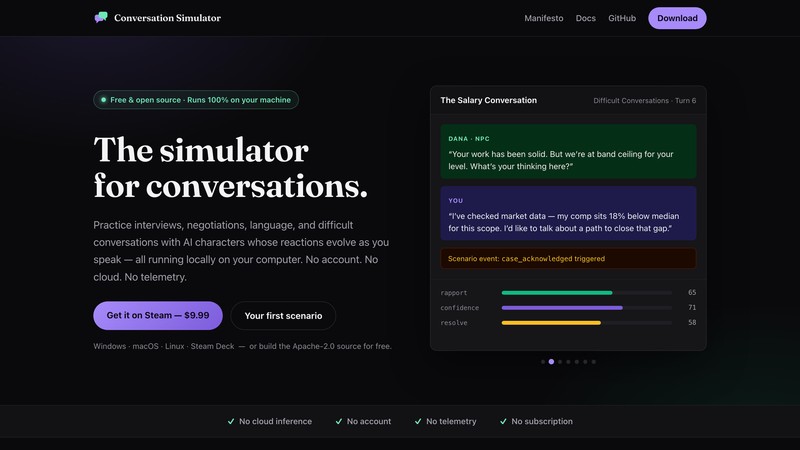
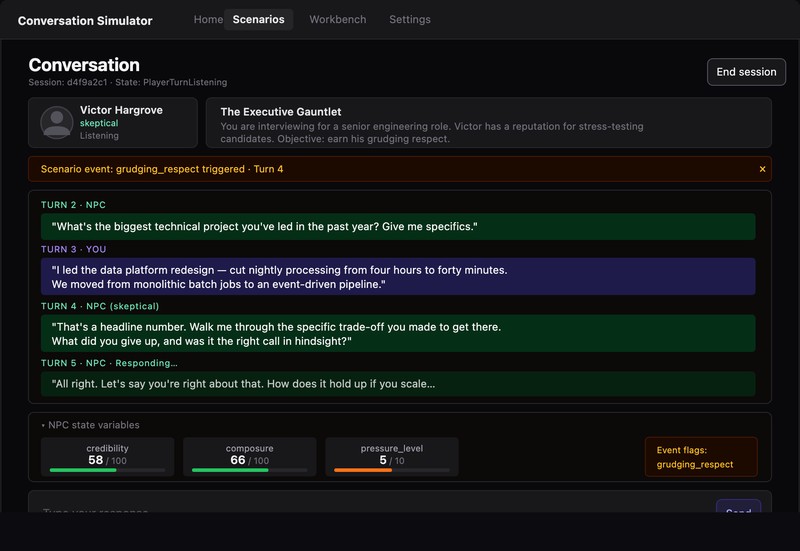
That is the same architectural argument the studio now makes at commercial scale on Conversation Simulator — the data never leaves the building, stated as a property of the design rather than a promise in a policy. Agendar is the small, early, free version of it, and it has been quietly demonstrating the claim since 2020. Six years on, longevity is its own proof.
Authored by Nick Charney Kaye with ♥ to meet the heightened strangeness of working from the internet. Sponsored by Outright Mental™. Privacy and Terms.
Being fully present with one thing at a time is the manifesto’s method, and deep focus is expensive to buy and trivially easy to lose. The whole product is one small courtesy to a person doing real work: tell them the meeting is coming, take nothing from them in exchange, and get out of the way.
Proof: agendar.outright.io — live since 2020, free, and still working exactly as described · Privacy · Terms.