

XJ Music Patent
Adaptive Music System
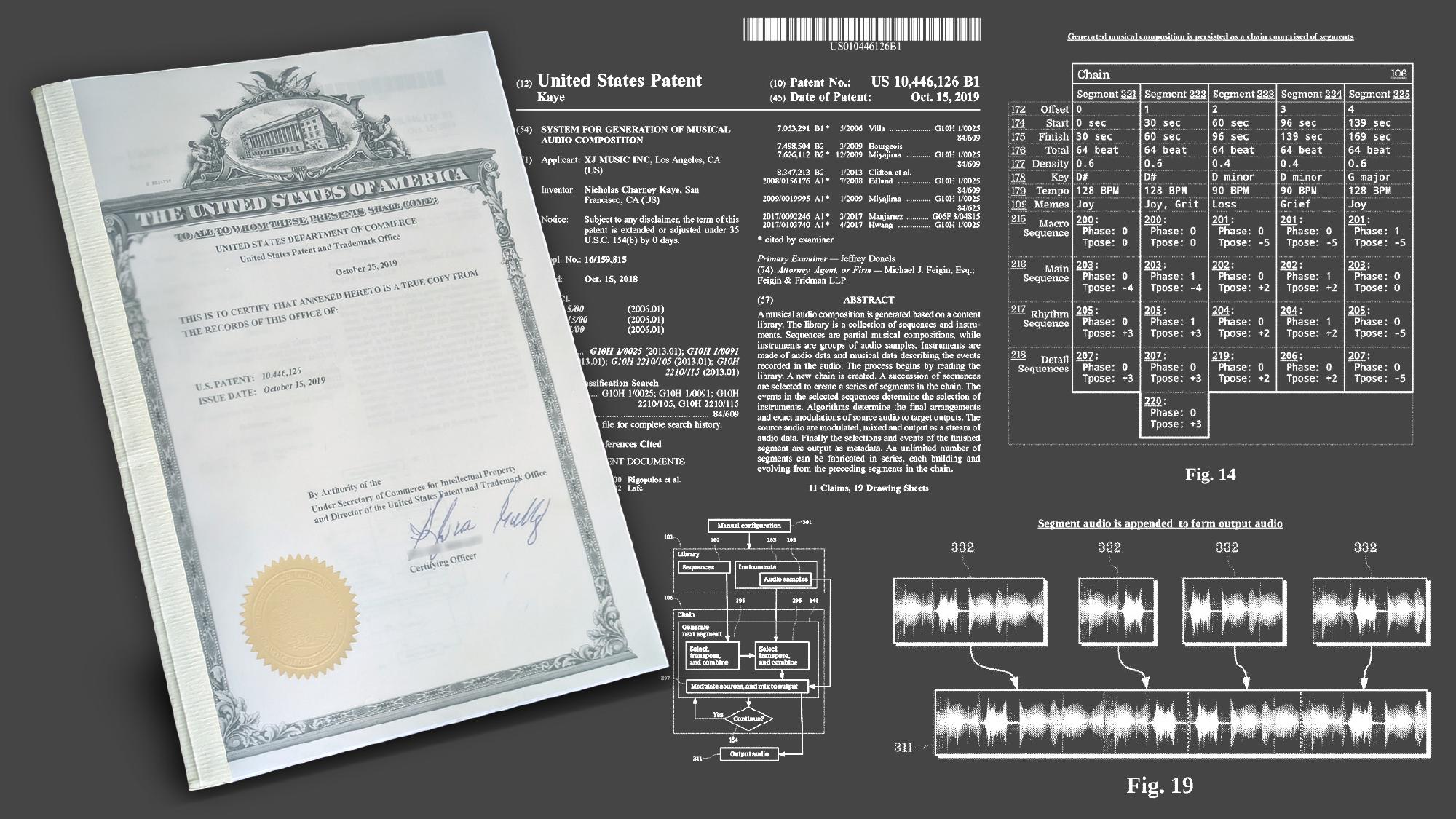
We designed and patented a system for generating never-repeating musical compositions from partial musical documents and instrument sample libraries—foundational IP behind XJ Music’s adaptive score engine.
The core technical challenge was building a music system that behaves like a living score: coherent over time, yet capable of indefinite variation without collapsing into randomness. We developed and secured intellectual property for a system that reads a library of musical content, constructs an ongoing chain of segments, matches partial compositions to appropriate instruments, then algorithmically arranges and modulates source audio to yield a continuous stream of unique output.
U.S. Patent 10,446,126 formalizes the “engine grammar”—the principles that let a composer author musical possibility spaces rather than fixed tracks.
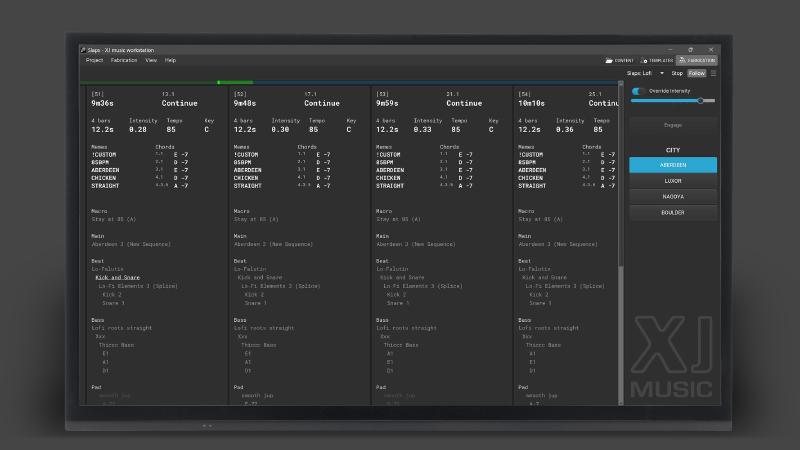
In the portfolio, the invention is presented at the system-design level—what the engine guarantees and how composers interact with it—supported by implementation artifacts and demos that show the concept working in practice.
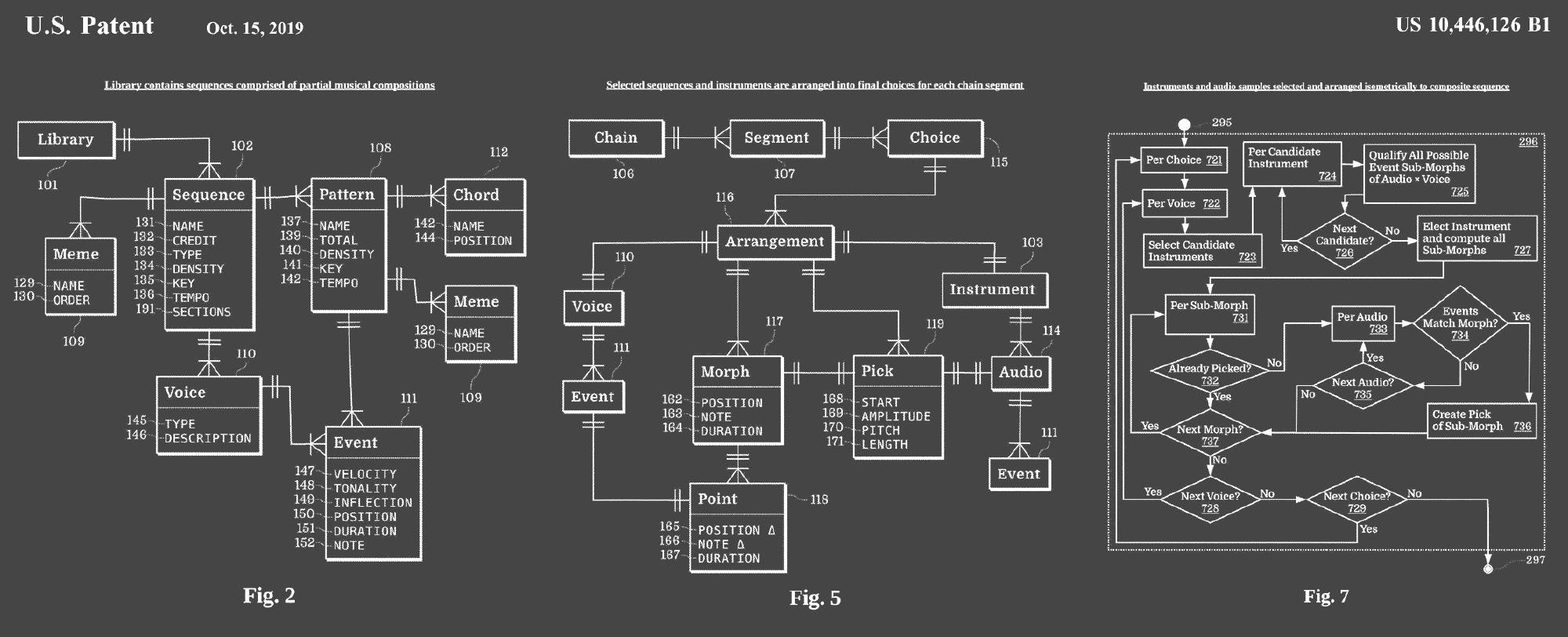
The system operates at a high level as: Library ingestion → chain construction → sequence selection → instrument/sample selection → modulation/render → stream output. This matches the public “how it works” narrative on the XJ Music About page.
Other XJ Music projects
The patent sits at the foundation of a broader body of XJ Music work—from the brand identity that made the technology culturally legible, to the merchandise that carried the mark into the physical world, the promo content that translated the system into a living public narrative, the mobile app that put adaptive music in listeners’ pockets, the demo scores and album artwork that proved the engine’s musical promise, the podcast that explored the ideas behind the system, and the open-source workstation and runtime engine that made it all available to composers and developers.