

XJ music Patent
U.S. Patent 10,446,126, 2019
- Target
- U.S. patent securing the adaptive-score engine's core architecture through the full USPTO process
- Constraints
- Solo inventor · no outside capital · full USPTO prosecution from provisional filing to granted patent
- Force fielded
- Nick Charney Kaye — inventor; Outright Mental Inc — assignee
- Time-to-dispatch
- Patent granted October 15, 2019; active through October 2038
- Result
- U.S. Patent 10,446,126 — granted by USPTO, assigned to Outright Mental Inc, in force and licensable
- Principal
- Outright Mental Inc (self-directed)
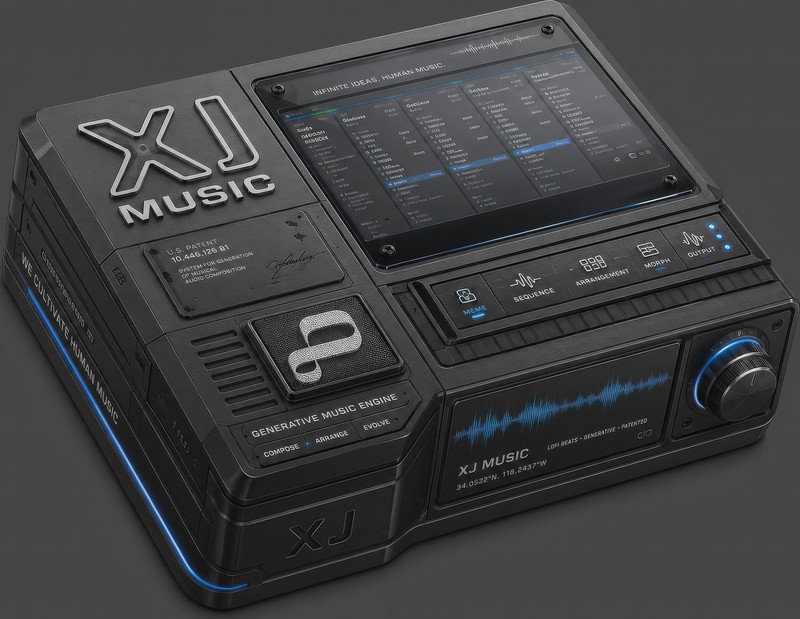
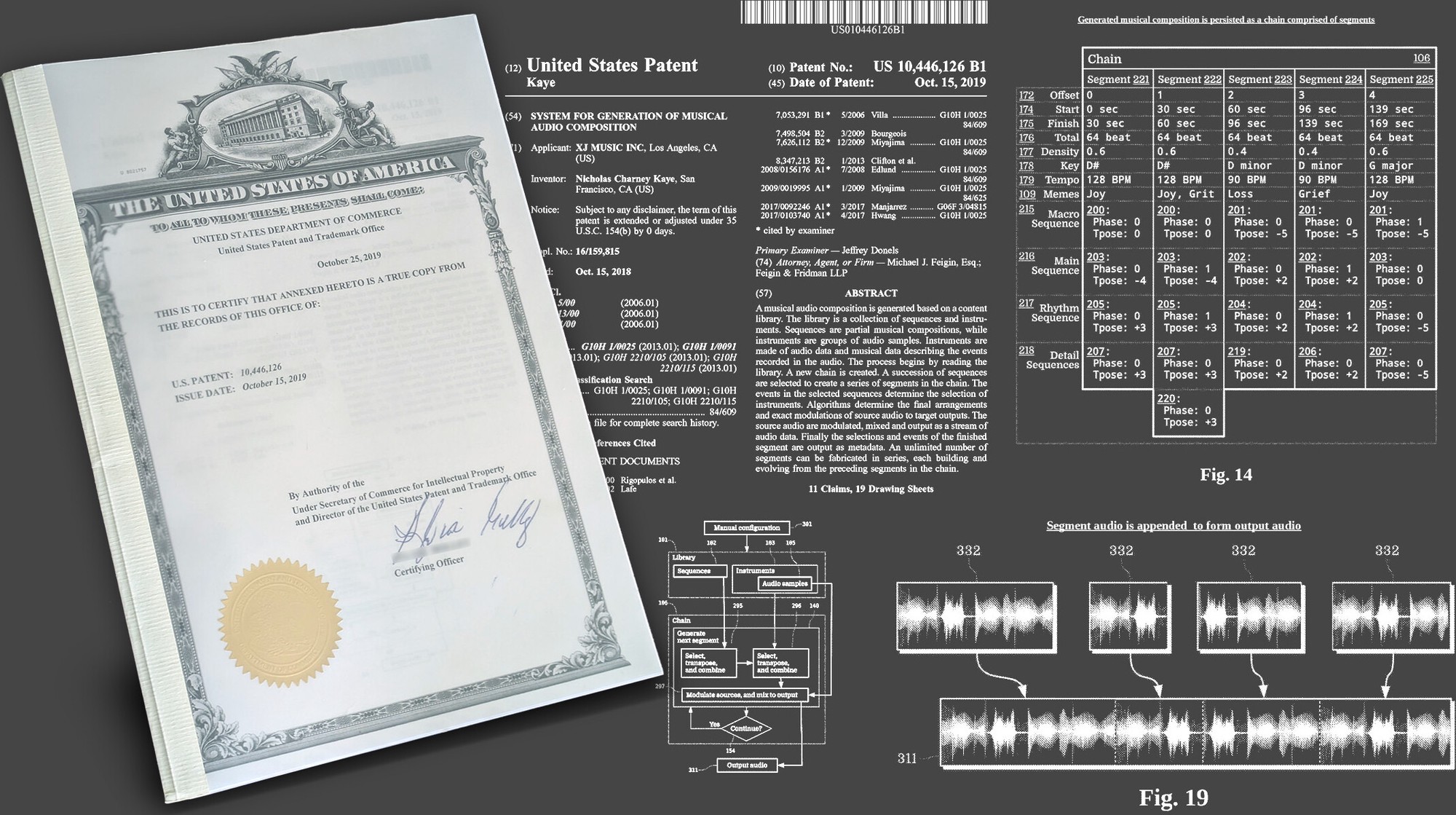
U.S. Patent 10,446,126 — the foundational intellectual property behind XJ music’s adaptive score engine. It formalizes a system for generating never-repeating musical compositions from partial musical documents and instrument sample libraries. It is a live, licensable asset: granted in 2019, assigned to Outright Mental Inc, and in force through 2038.
Patent facts
- Patent number: U.S. 10,446,126
- Granted: October 15, 2019
- Anticipated expiration: October 15, 2038
- Assignee: Outright Mental Inc
- Inventor: Nicholas Charney Kaye
- Classification: G10H — electrophonic musical instruments (rule-based automated composition)
- Scope: System and method for generating musical compositions from partial musical documents and sample libraries
Every fact above is verifiable on the Google Patents record.
What we did
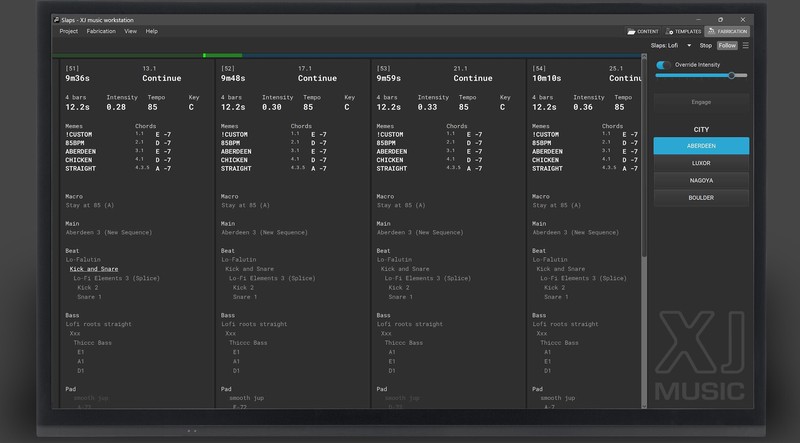
Designed the patented architecture: a system that reads a library of musical content, constructs an ongoing chain of segments, matches partial compositions to appropriate instruments, then algorithmically arranges and modulates source audio to yield a continuous stream of unique output. Filed and secured the patent through the full USPTO process.
The patent formalizes what we call the “engine grammar” — the principles that let a composer author musical possibility spaces rather than fixed tracks.
What the patent covers
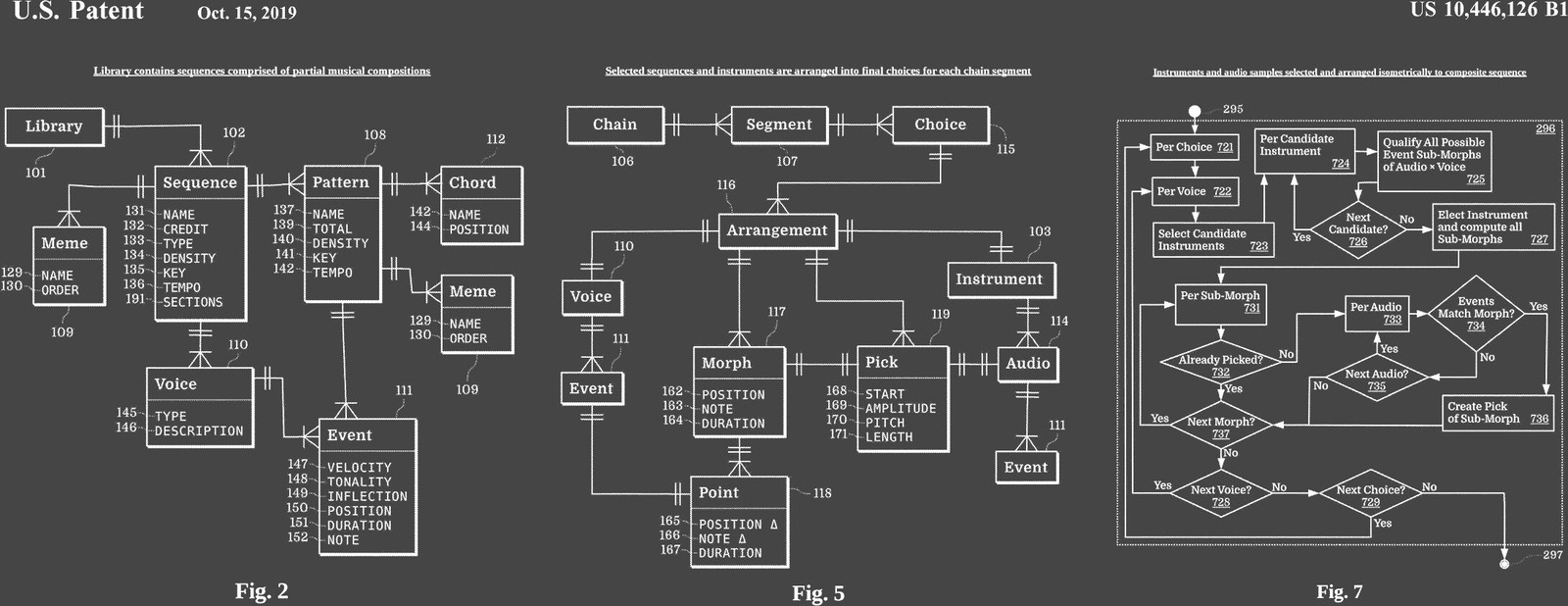
In plain language — read from the patent text, not offered as legal advice — US 10,446,126 covers a particular way of assembling music from parts. A library of partial compositions and sampled instruments is chained into an unbroken series of segments, chosen hierarchically: macro-sequences guide the selection of main-sequences, which in turn guide the segments themselves. Instruments are matched to each segment not by literal notes but by shared descriptive tags the patent calls memes, compared through an isometric graph comparison of musical events. The selected audio is then modulated — shifted independently in pitch and tempo — and mixed in layers (harmonic, melodic, percussive) into the segment’s output. Each segment inherits key, tempo, and progression from the segments before it, so the chain builds and evolves continuously without ever repeating.
Technical Architecture
The system operates as a pipeline: library ingestion → chain construction → sequence selection → instrument/sample selection → modulation/render → stream output. Each stage is defined in the patent claims with specific algorithmic guarantees about musical coherence under infinite variation.
Licensing
Parties building their own generative-music systems that fall within the claims of US 10,446,126 may license the patent directly from Outright Mental Inc — a track kept deliberately separate from licensing the XJ music software itself. These inquiries are inbound-only and priced per deal; there is no rate card, because no two of these conversations are alike. To open one, email licensing@xjmusic.com or reach the studio through its contact page.
Patent licensing sits alongside the software and embed-license paths in the Work with XJ section of the XJ music hub, and is listed as a standalone offer in the studio’s Research & IP services.