

Outlaws Patch
Motorcycle Club Insignia, 2001
- Role
- Insignia design
- Target
- A club insignia that reads at forty feet, embroiders cleanly in two colors, and survives thread resolution
- Constraints
- 2001 · Chicago · embroidery, not print — every curve had to hold at merrowed-border scale · a client whose design review is refreshingly direct
- Force fielded
- Nick Charney Kaye — insignia design
- Time-to-dispatch
- Delivered 2001, embroidered and worn
- Result
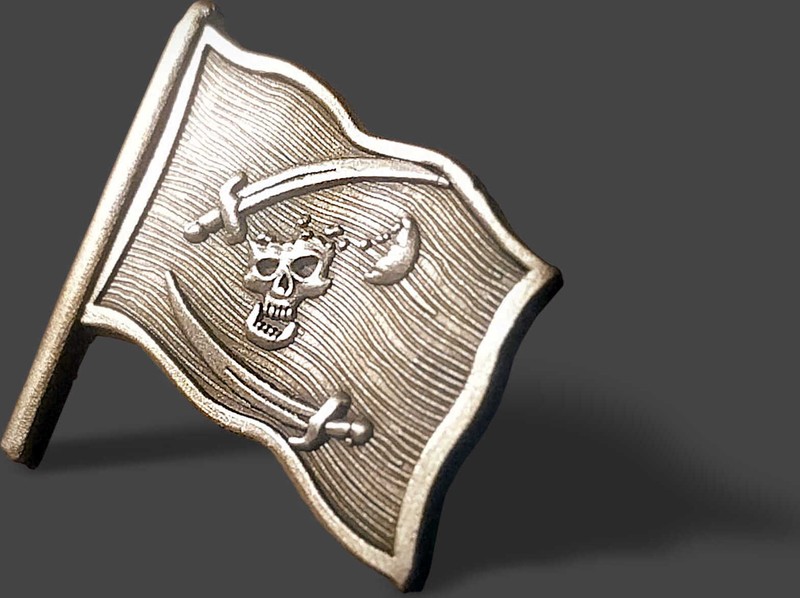
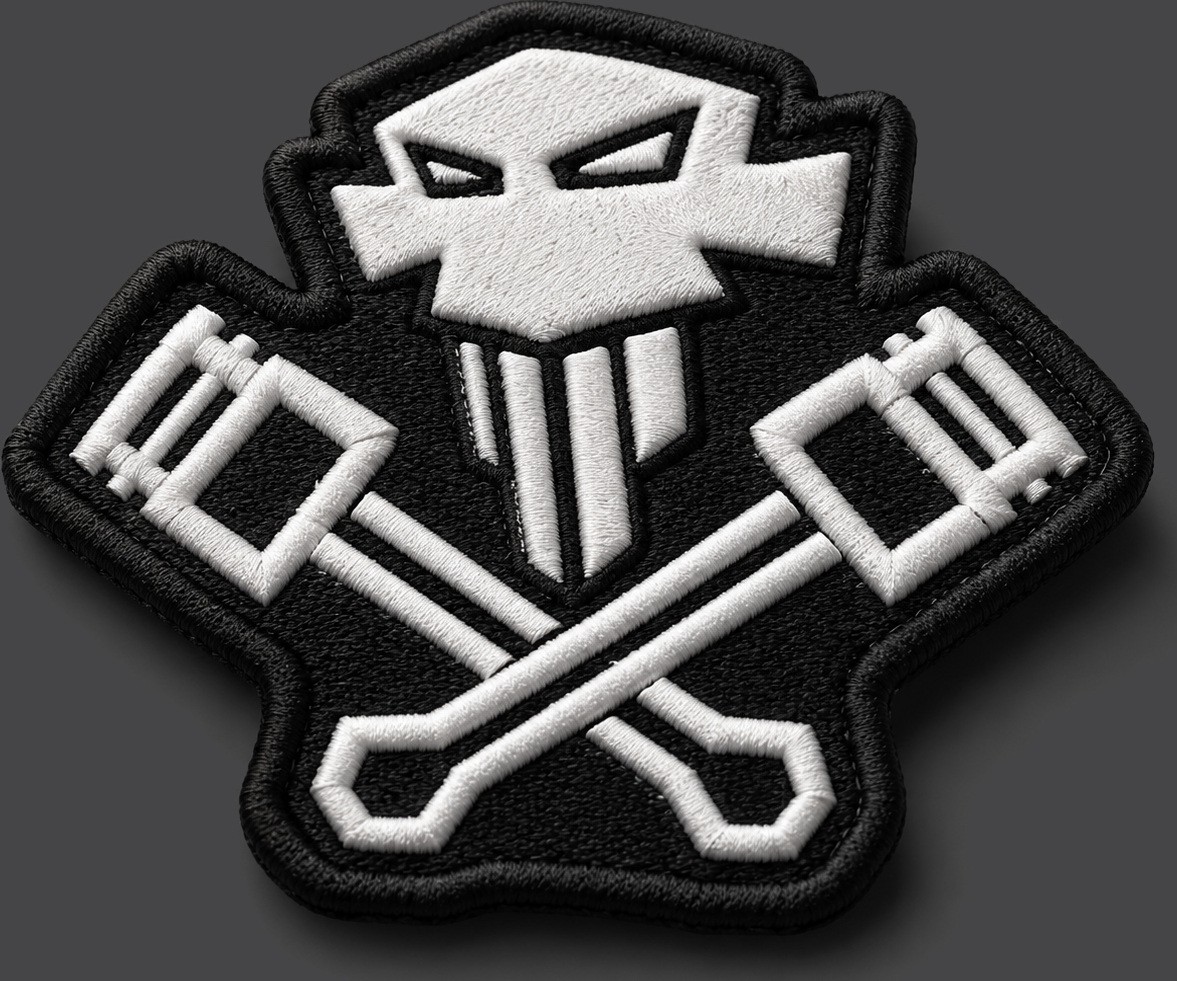
- A machine-skull-over-crossed-pistons patch — the Jolly Roger rebuilt entirely from motorcycle parts — and the first entry in the skull lineage that runs through Long Pigs to the studio's own flag, Mental Roger
- Principal
- A Chicago motorcycle club (not named, by request of the era)
- White on black twill commissioned insignia · embroidered, wornArchival · 2001
Many, many years ago, back in Chicago, the studio’s operator designed this patch for a motorcycle club — the kind of client you don’t name-drop casually, and the kind whose design review process is refreshingly direct.
The brief, functionally: a mark that reads at forty feet, embroiders cleanly in two colors, and makes the wearer look like a bad decision to interfere with. The answer is the oldest grammar in the outlaw lexicon — the Jolly Roger — rebuilt entirely from motorcycle parts.
The crossbones: two engine pistons, crossed at the connecting rods — the part of the motorcycle that actually does the work, doing the work of the bones.
Colorway: white thread on black twill, merrowed border. Two colors, forty feet, no mistakes.
Format: embroidered patch — drawn to survive thread resolution, which is the discipline separating patch design from logo design.
The lineage
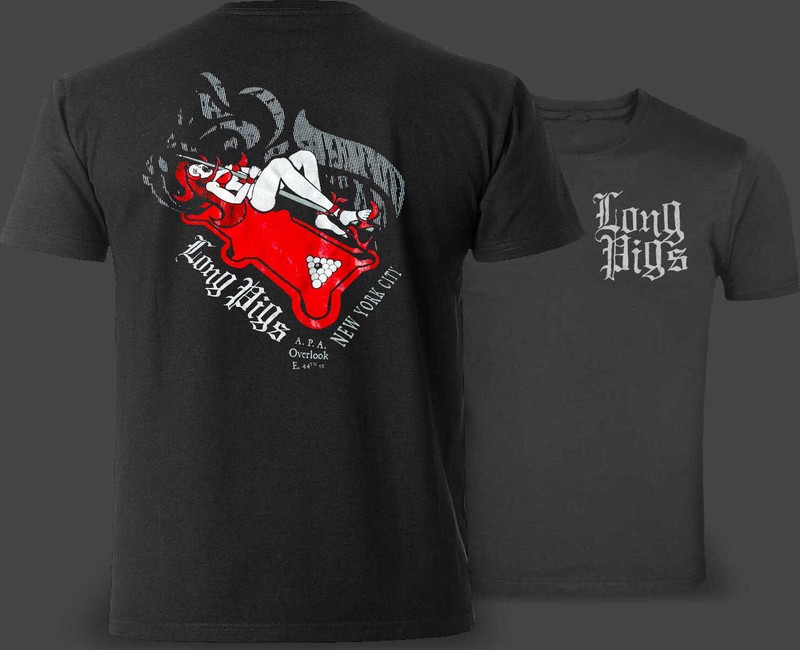
File this next to the Jack of Souls, drawn the same era: the studio has been designing defiance flags from the beginning. Skull grammar recurs from this patch through the Long Pigs team shirt all the way to Mental Roger — the studio’s own flag, a skull opening its own head. The difference is the direction the blades point. A club patch points its menace outward, at the world; Mental Roger turns the same iconography inward, at the self. Twenty years of drawing skulls, and the real progress was figuring out who the adversary is.
The manifesto calls its own flag an antiestablishment signal turned inward. This patch is where the outward version got mastered first — you learn to draw the warning before you learn what actually needs warning about.
Record: a 2001 commission for a client the era does not name, embroidered and worn. No link to follow — the artwork is the whole surviving evidence, which is how most patch work ends up in an archive.