

Jack of Souls
Character Illustration, 2003
- Role
- Character design & illustration
- Target
- An original face card for a deck that does not exist — a trickster the studio could keep
- Constraints
- 2003 · self-directed · the Flash-and-Illustrator dialect of its decade: hard vector shapes, four colors, no gradients to hide in
- Force fielded
- Nick Charney Kaye — character design and illustration
- Time-to-dispatch
- Drawn October 2003; filed under both jack-of-soul and pirate in the original portfolio, which was the tell
- Result
- The Jack of Souls — the first time this studio drew defiance as a character and let it grin, and the direct ancestor of the studio flag, Mental Roger
- Principal
- Outright Mental (self-directed)
- Ancestor of Mental Roger studio archive · original characterArchival · 2003
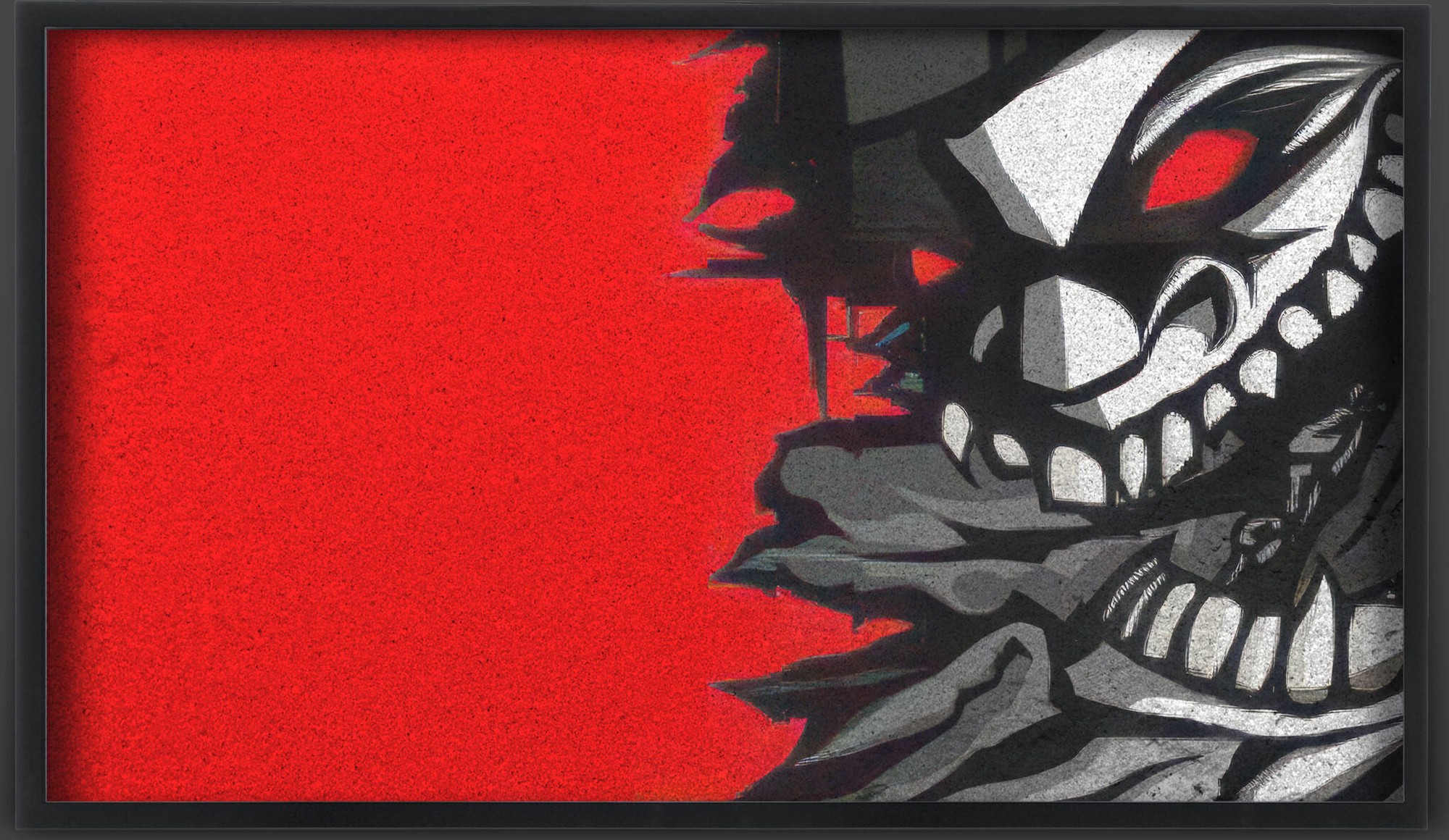
Every deck has its face cards. This one never made it into a deck — it made it into a lineage. From the mid-2000s character-art era, an original: the Jack of Souls.
Suit: Souls. A fifth suit; the deck didn't ask for it.
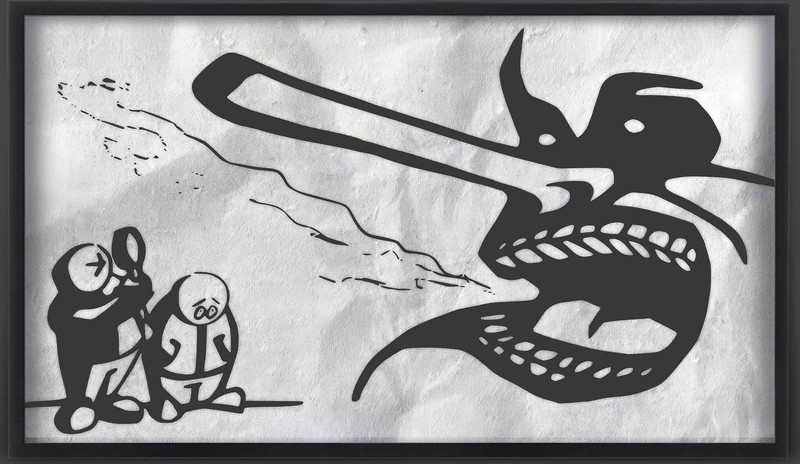
Livery: red, black, white, grey. Harlequin-diamond skullcap, tattered cloak.
Tell: the grin — a stacked double row of teeth, chain-links in the lower jaw. He is delighted about something you haven't noticed yet.
Eyes: red diamonds. Card suits, weaponized.
In this banner cut composition, a flat field of red is interrupted at the edge by that face, arriving. Hard vector shapes, aggressive negative space, a strict palette: the Flash-and-Illustrator dialect of its decade, spoken with intent.
Why he matters here
Filed under both jack-of-soul and pirate in the original portfolio — jester and Jolly Roger were already the same figure. Two decades later the studio’s flag is Mental Roger: a skull opening its own head, blades in balance, drawn from the same well. The Jack is the ancestor — the first time this studio drew defiance as a character and let it grin.
The manifesto reads Mental Roger as exposure rather than violence — opening the mind, not armoring it. The Jack of Souls is the rowdier draft of that idea: overexuberance personified, the danger the manifesto warns about, having the time of his life. You keep the early cards. They tell you which suit you were always going to play.
Record: an original character, never licensed and never sold — the drawing is the evidence. Where it did ship is two decades downstream, cast in pewter: Mental Roger.