

Bubble Up!
Global Game Jam 2025
- Role
- Game design & engineering, on a four-person team
- Target
- A complete, playable game from a cold theme in 48 hours — shipped to the browser, not demoed off a laptop
- Constraints
- 48 hours · theme announced at the start (Bubble) · a team of four who had not built together · browser build, so it has to run without install or account · and a CI pipeline standing up mid-jam because the team refused to deploy by hand
- Force fielded
- Miranda Ku, Joseph Miller, fruitsdancer, and Nick Charney Kaye — one weekend at Noisebridge
- Time-to-dispatch
- Theme Friday 18:00, submitted Sunday 18:00 — 48 hours, 120 commits, auto-deployed on every push
- Result
- A finished game in which you are not the character — you are the water — still playable in the browser, source in the public domain under the Unlicense, with the raw R&D shipped inside it behind a hidden EXPERIMENTS button
- Principal
- Global Game Jam 2025 — Noisebridge, San Francisco
Global Game Jam 2025. Theme: Bubble. Site: Noisebridge, San Francisco — the same hackerspace where Fever Tilt would later be born on the arcade table. Team of four. Forty-eight hours. The result is still playable in your browser right now — no download, no account, just a link.
▶ Play it now in your browser →
Since a jam is a weekend-shaped pressure vessel, here’s the log:
FRI 21:00 The inversion lands — you aren't a character. You're the water.
SAT Godot + GDScript. Swipe currents. Bubbles merge, split, vanish. Jellyfish object.
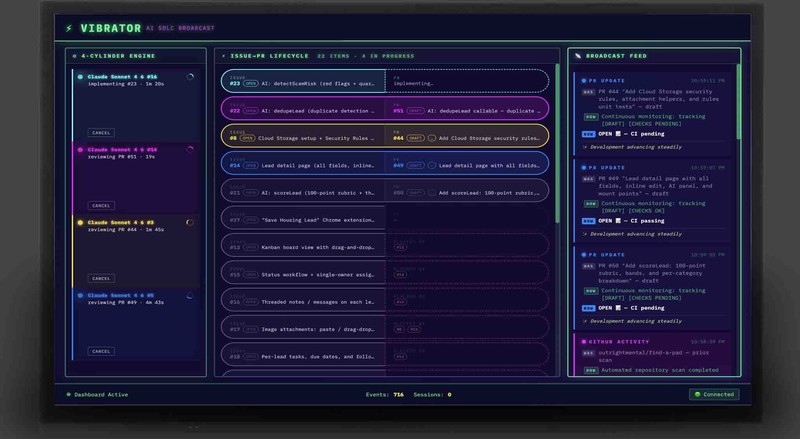
SAT 23:00 CI pipeline auto-deploys every commit to the web build. At a game jam. Yes.
SUN Ocean layers, shipwreck floor, sea mines. Hidden EXPERIMENTS button ships.
SUN 18:00 Submitted. 120 commits. Public domain (Unlicense).
The avant-garde bit
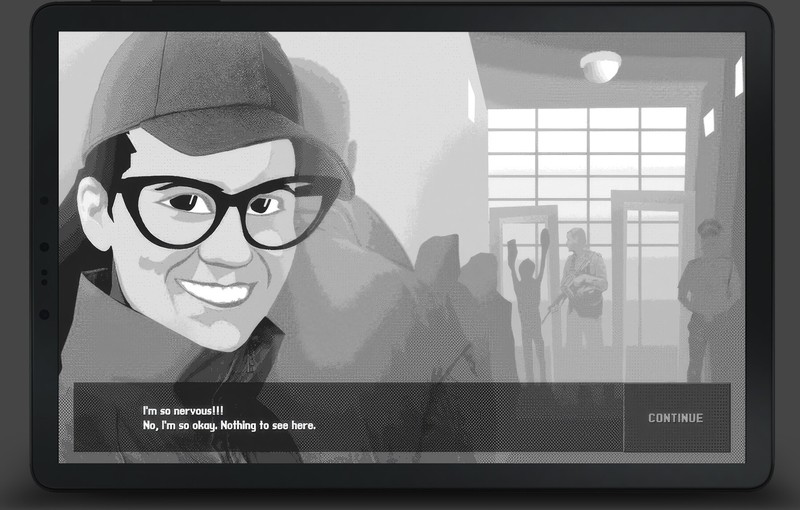
“Make the biggest bubble and guide it up to the surface.” You never touch a bubble — you swipe to move the water, and the currents do the shepherding past jellyfish, wrecks, and mines, up through the ocean’s layered light. Bubbles merge when gathered, shatter when careless, and a perfect run delivers them to the surface as one. There is no death, no enemy, no way to lose in this ambivalent universe — the team called it “an avant-garde piece exploring an uncharted UI paradigm,” and the jam’s diversifier list agreed (“Outside the box”; also, accurately, “Herding cats”).
The title screen hides a second game: an EXPERIMENTS button exposing the raw prototypes behind the design — and experiment 5’s tuning parameters carry back into the real game as an easter egg. The R&D shipped inside the product.
The manifesto wants mechanics that expose choice rather than hide it — and here the choice is the whole interface: indirect control means every swipe is a negotiation with physics, not a command. No punishment, no failure state; just presence, currents, and consequences. Small team, one weekend, complete expression.
Why this matters if you’re hiring us
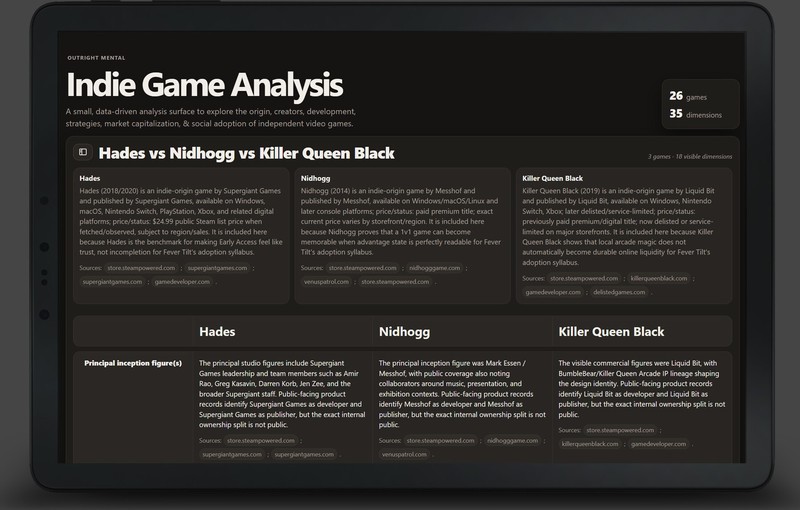
Forty-eight hours from a cold theme to a shipped, CI-deployed, browser-playable game is the extreme end of a practice the studio runs on purpose: reach the earliest playable form faster than anyone expects — the home turf the studio has measured game-by-game at Indie Game Analysis. The Playable Prototype Sprint is that same reflex on a commercial clock — three weeks to an interactive proof of one concept, delivered with a findings memo and a “what it would take” build map. A jam is where we prove the speed is real with the whole R&D left visible — that is what the EXPERIMENTS button is; a sprint is where we point that speed at your problem.
Credits — a four-person team, one weekend at Noisebridge: Miranda Ku, Joseph Miller, fruitsdancer, and Nick Charney Kaye. Jam work is a commons; everyone who shipped it is named here, by the name or handle they go by.
Proof: play it · source on GitHub · GGJ entry · Noisebridge jam site.