

Indie Game Analysis
Data-Driven Games Research, 2026
- Role
- Research instrument design & engineering
- Target
- Replace indie-success mythology with comparable, sourced records — before the studio's own money followed a narrative
- Constraints
- 2026 · every game faces the identical dimensions, flattering and uncomfortable alike · sources pinned per claim rather than per page · browsable with or without JavaScript · and a published methodology firewall that paying parties cannot buy their way around
- Force fielded
- Nick Charney Kaye — instrument design, research and engineering
- Time-to-dispatch
- Live at iga.outright.io, 2026 — and now commissionable as a research brief
- Result
- A working research surface: 26 independent games across 35 standardized dimensions, six-way side-by-side comparison, every comparison a shareable URL, every claim sourced. The rule is published and governs paid work without exception: if a claim has no source, it doesn't ship
- Principal
- Outright Mental (self-directed — then opened for commission)
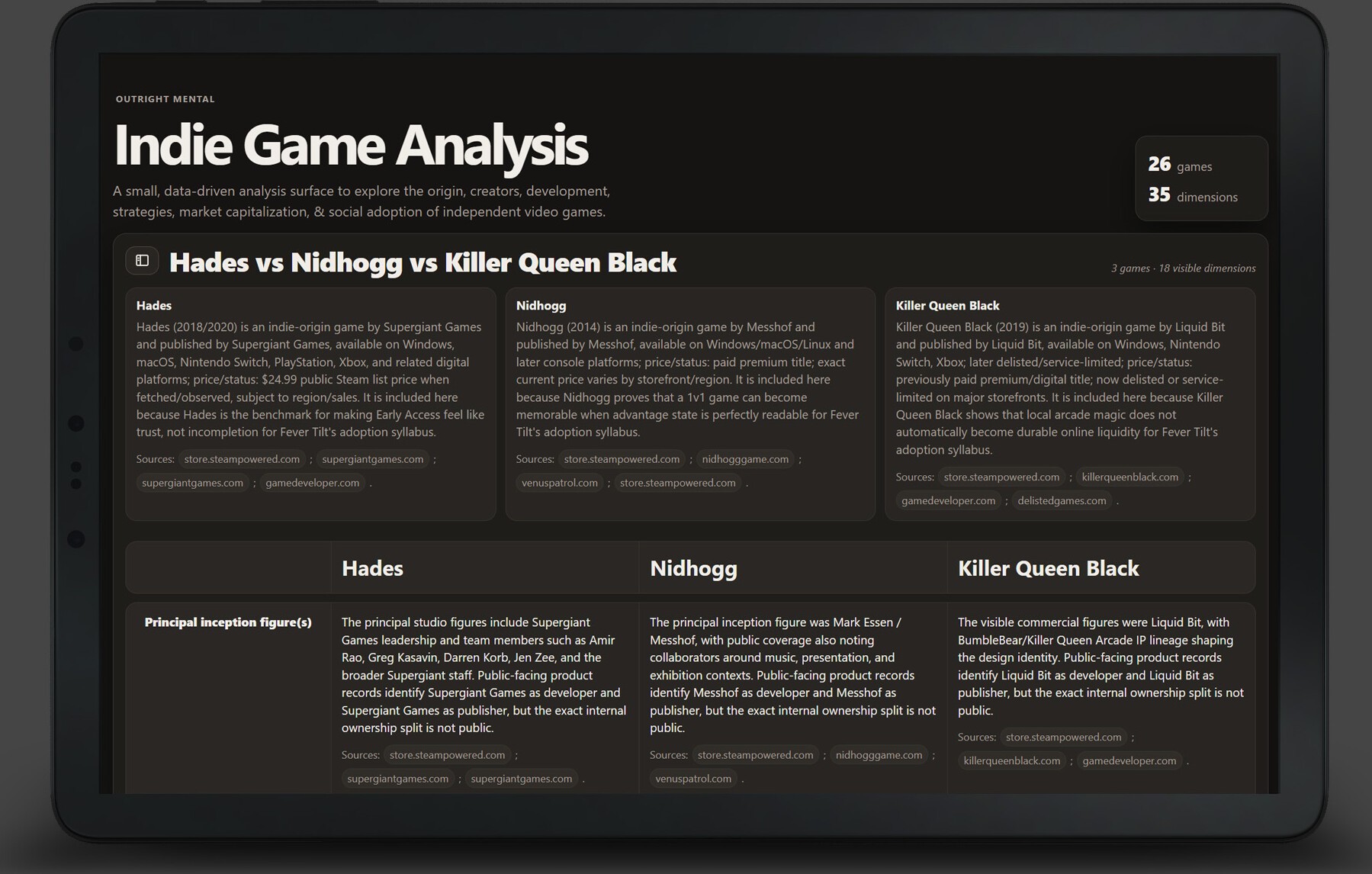
Indie Game Analysis is a research instrument: 26 independent games, each broken down across the same 35 standardized dimensions — from earliest playable form and original design thesis to who likely split revenue, nepotism assessment, and luck / happy accident component. Compare up to six games side by side, filter to only the dimensions where they differ, share any comparison as a URL. Sources cited on every claim, browsable with or without JavaScript.
Our manifesto says we question narratives — including our own. So the honest way to showcase the instrument is to aim it at itself. Below: entry #27, analyzed on its own dimensions.
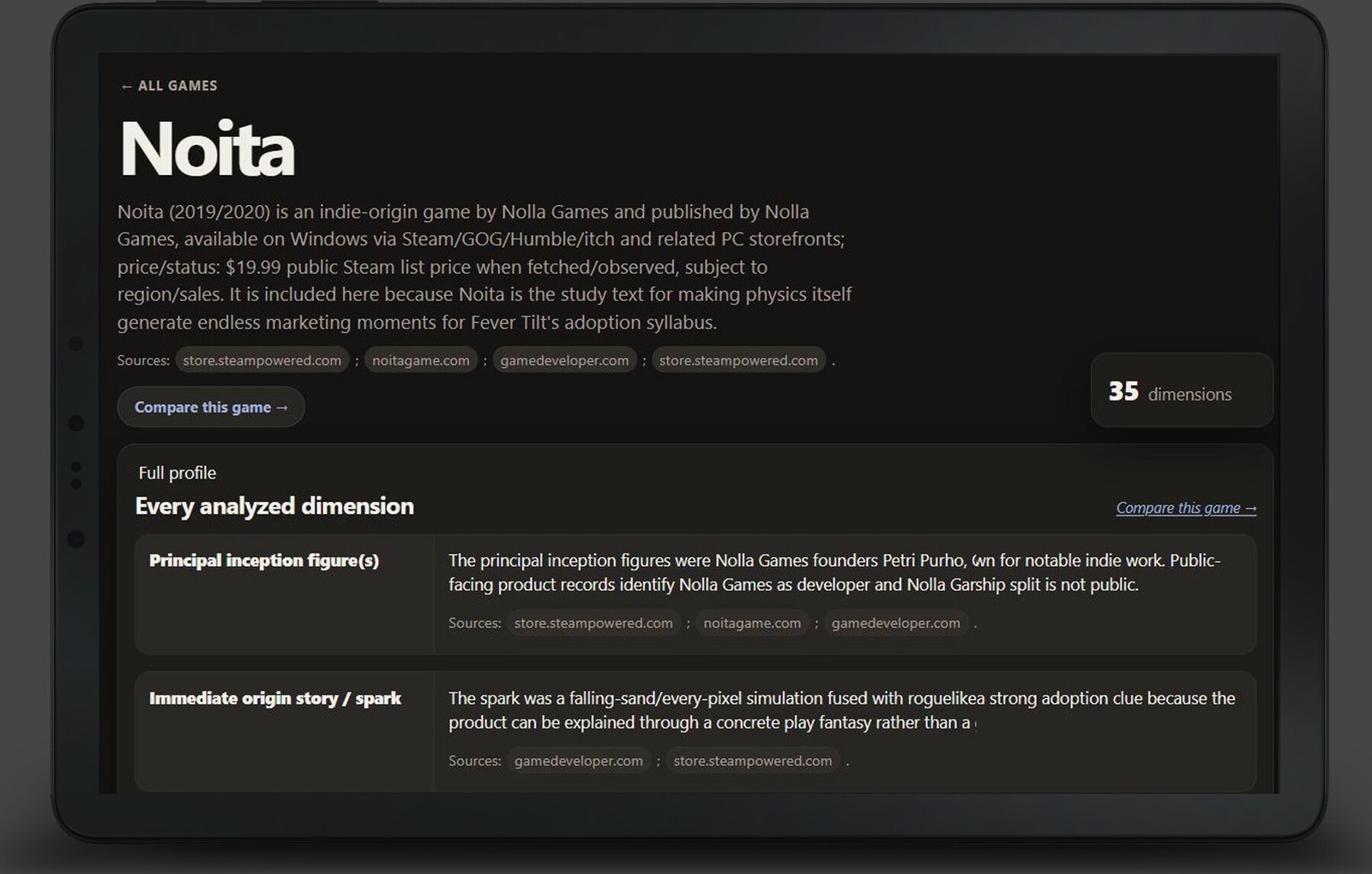
What a profile looks like
Each game gets a full standardized breakdown. Here’s the top of Noita’s — included in the dataset because Noita is the study text for making physics itself generate endless marketing moments:
The adoption syllabus
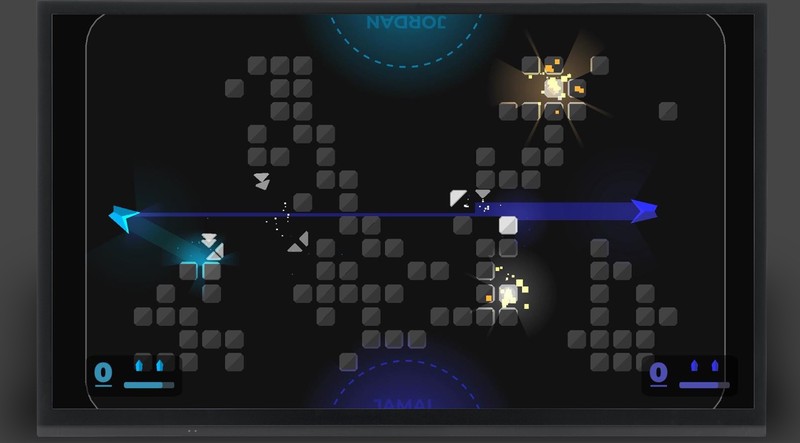
The dataset doubles as the curriculum for Fever Tilt. Lethal League Blaze is the clearest study in making a dangerous object carry a whole competitive game. Duck Game is a compact lesson in turning chaos into shareable social memory. ROUNDS is the anti-snowball 1v1 case a score-race sport should take seriously. Videoball is the minimalist digital-sport cautionary tale. Twenty-six games in, patterns stop being anecdotes: the entries state why each game is included in Fever Tilt’s syllabus, right in the record.
Presence over avoidance, per the manifesto, applies to business reality too. It would be more comfortable to study only the wins, skip the luck audit, and assume the origin myths are true. The instrument looks directly — at demand evidence, at recoupment logic, at what actually made these games take hold — and proceeds anyway.
Commission the instrument
The instrument was built for one studio’s own decision: before real money followed an indie success story, it wanted to know what the record actually shows. Nothing about it stops there — the same 35 dimensions can be aimed at whatever titles and questions you are deciding about. So the instrument is now something you can commission.
For publishers and funds, that is the entire value: diligence that answers “what does the record actually show?” before money follows narrative — the flattering dimensions and the uncomfortable ones, on the titles you are actually weighing. It was the tool’s founding purpose; commissioning simply points it at your decision instead of ours.
Methodology firewall
Neutrality is the whole product, so paying us cannot buy influence over it. The same rule governs the free instrument, commissioned briefs, and sponsorship alike. It is published here and mirrored on iga.outright.io:
- Sponsors get no input into which dimensions exist, which games are analyzed, or what any profile concludes.
- Companies whose games appear in the dataset are excluded from sponsorship — no one buys a slot beside their own analysis.
- Commissioned briefs are marked as commissioned, in the open, on the artifact itself.
- The rule that governs the free instrument governs paid work without exception: if a claim has no source, it doesn't ship.
If a commission’s honest answer is unflattering, that is the answer you paid for. An instrument that would soften the record for money is worthless to anyone doing diligence — which is exactly who this is for.
Proof: iga.outright.io — the analysis tool · all 26 games · all 35 dimensions