

Partybot
Intelligent Party Control Unit, 2014
They’re the studio’s first experiment in giving a piece of software a body.
The interface was a postcard. Small cards scattered around a party, Partybot’s photo on one side, and on the other, instructions in the first person: Hi. I’m Partybot. Text me to learn about my functions. No app to install, no QR code, no account — just the one piece of infrastructure every guest already carried in 2014: SMS, pointed at a real Brooklyn phone number (now honorably retired).
The functions
DJ requests. Song requests route to the DJ without anyone leaning over the decks to shout a title into a headphone ear.
Host alerts. Anything else — we're out of ice, the door's stuck, there's a creeper in the kitchen — routes quietly to the hosts. Partybot took the creeper problem seriously before most social software admitted it existed.
The body
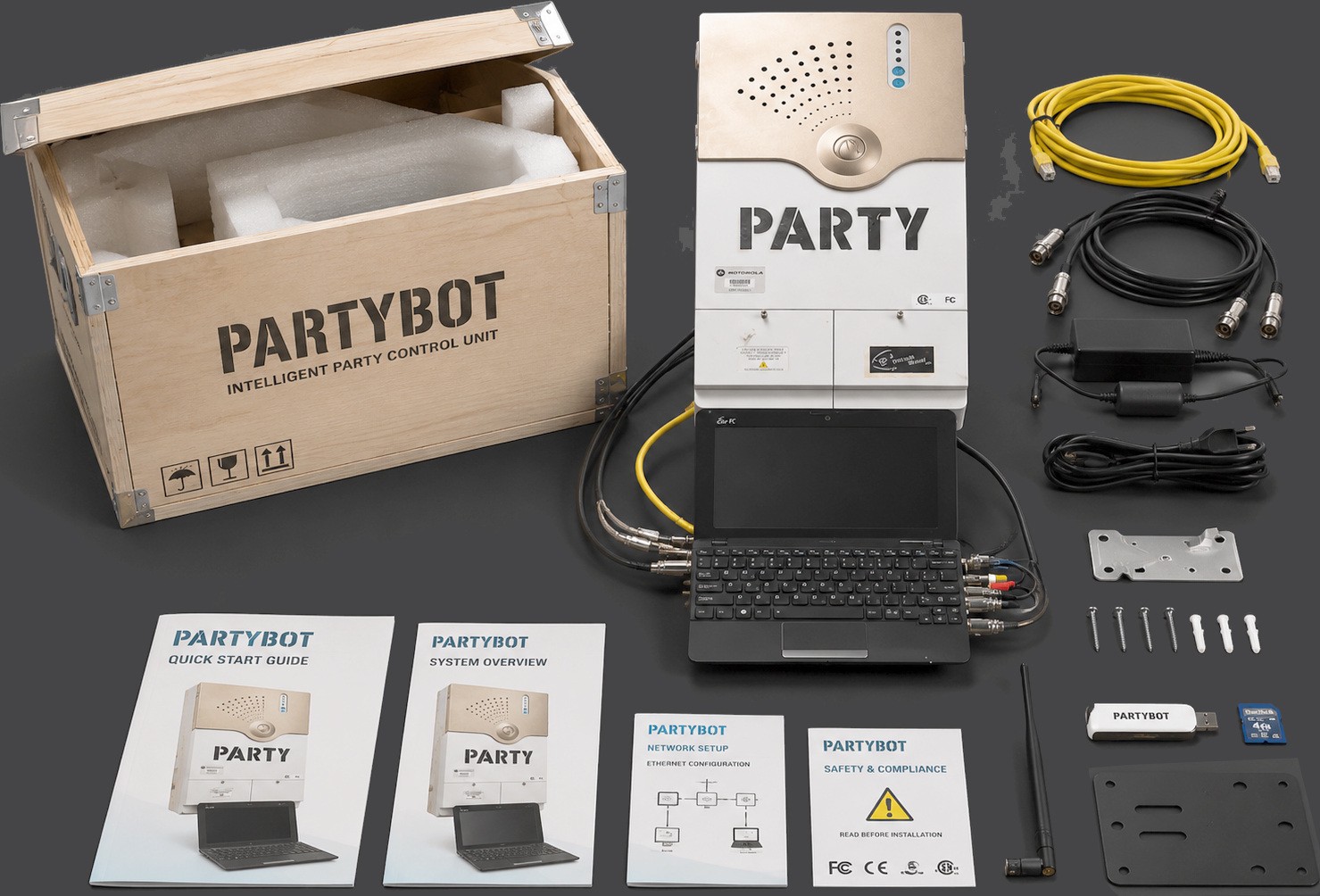
The feature image is the joke played completely straight: Partybot as shipped product, unboxed — wooden crate stenciled INTELLIGENT PARTY CONTROL UNIT, a wall-mount enclosure of distinctly telecom-surplus pedigree with a speaker grille and a stenciled PARTY, a netbook running the brains, quick-start and safety-and-compliance booklets, mounting hardware, branded USB stick. Software with a body gets the full industrial-product treatment, safety warnings included, because a robot that hosts your party deserves better than being just an app.
Under the hood: a full-stack JavaScript build — MongoDB, Node.js, Express, Angular — with a proper test suite, published as open source. For 2014, a texting robot with CI-grade engineering behind it was a deeply unreasonable amount of rigor for a party trick, which is exactly the studio’s kind of unreasonable.
The manifesto values direct experience — in life, in design, and in play. Partybot was built on the observation that the best party technology is the kind nobody has to look at: heads stay up, the album builds itself, the DJ hears you, and the hosts find out about the creeper. The software had a body so the people didn’t have to have screens.
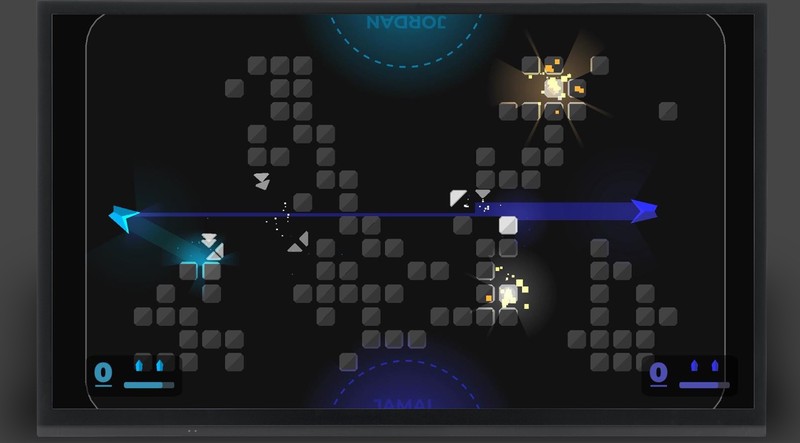
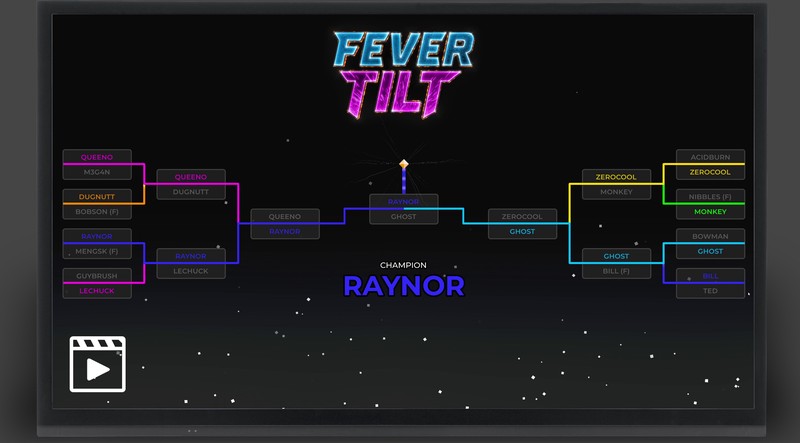
The lineage. A decade before Conversation Simulator gave software a voice and Fever Tilt put a game inside a physical arcade table, Partybot was the first time the studio asked the question it’s still asking: what happens when software shows up in the room?
Proof: source on GitHub — MongoDB, Node, Express, Angular, and the whole doc folder.