

Running Heavy
Documentary Website, 2007
- Role
- Art direction & engineering
- Target
- A film website that puts the visitor inside the cab — a diegetic interface for a feature documentary about a long-haul trucker, not a template with a trailer embed
- Constraints
- 2007 · Flash-era web · independent documentary · every surface of the interface had to be drawn or photographed, including a chrome mudflap girl with no usable source to trace
- Force fielded
- Nick Charney Kaye — art direction and engineering
- Time-to-dispatch
- Delivered December 2007; the site held its corner of the web until at least 2022
- Result
- runningheavy.com shipped as a photoreal big-rig dashboard with a fully interactive Realistic-brand CB radio playing real road recordings. The film appears never to have been released — no IMDb entry exists — and the site outlived it by roughly fifteen years
- Principal
- Running Heavy — Nicholas Robespierre, director
- ~15 years site live, outliving its filmArchival · 2007
- a working CB radio hidden feature nobody documentedArchival · 2007
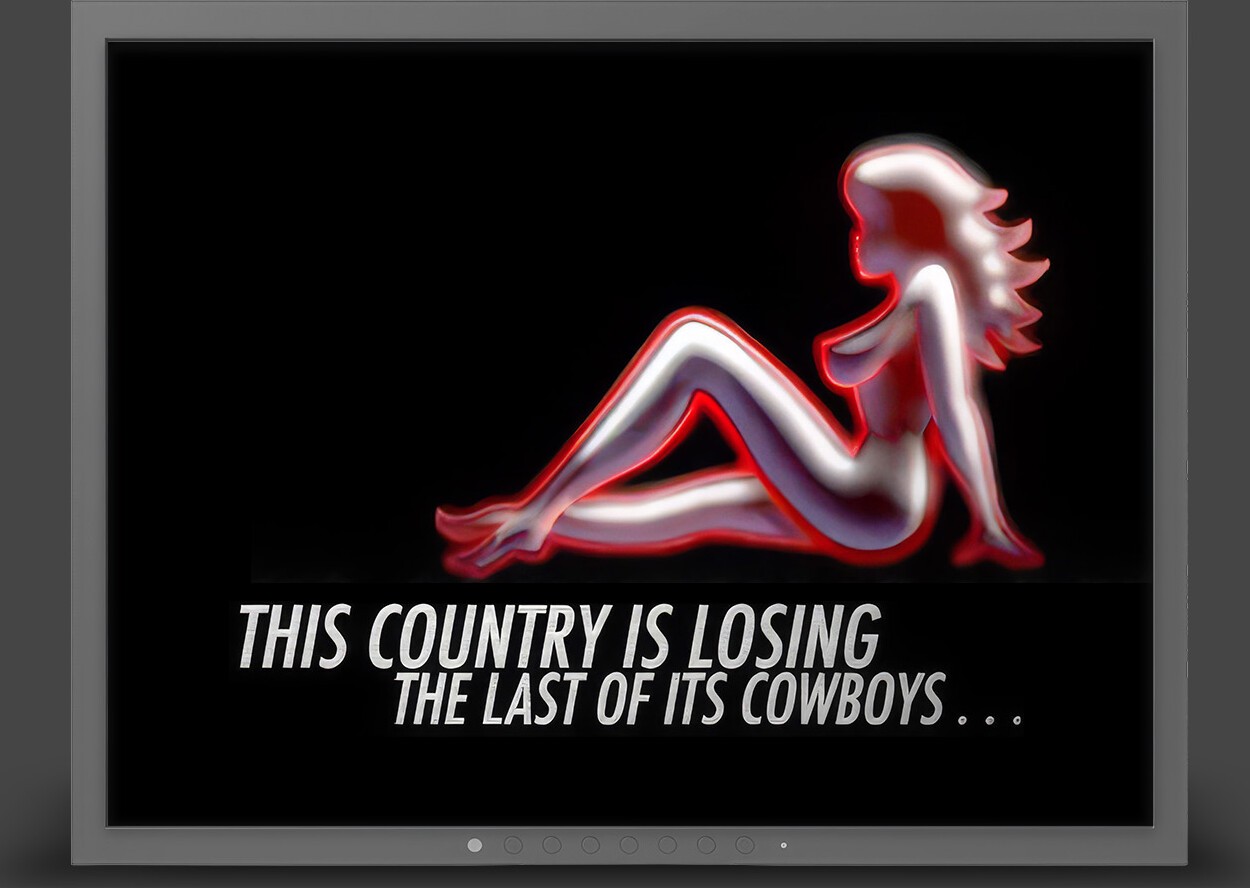
“This country is losing the last of its cowboys…”
Running Heavy was Nicholas Robespierre’s feature documentary about Ed Wintersteen — a renegade long-haul trucker with thirty years and millions of miles behind him, who becomes the unwitting victim of a drug-smuggling operation and has to fight to clear his name. The film needed a website that felt like the inside of the cab. So the site was the cab.
Best explained the way the site talked — over channel 19:
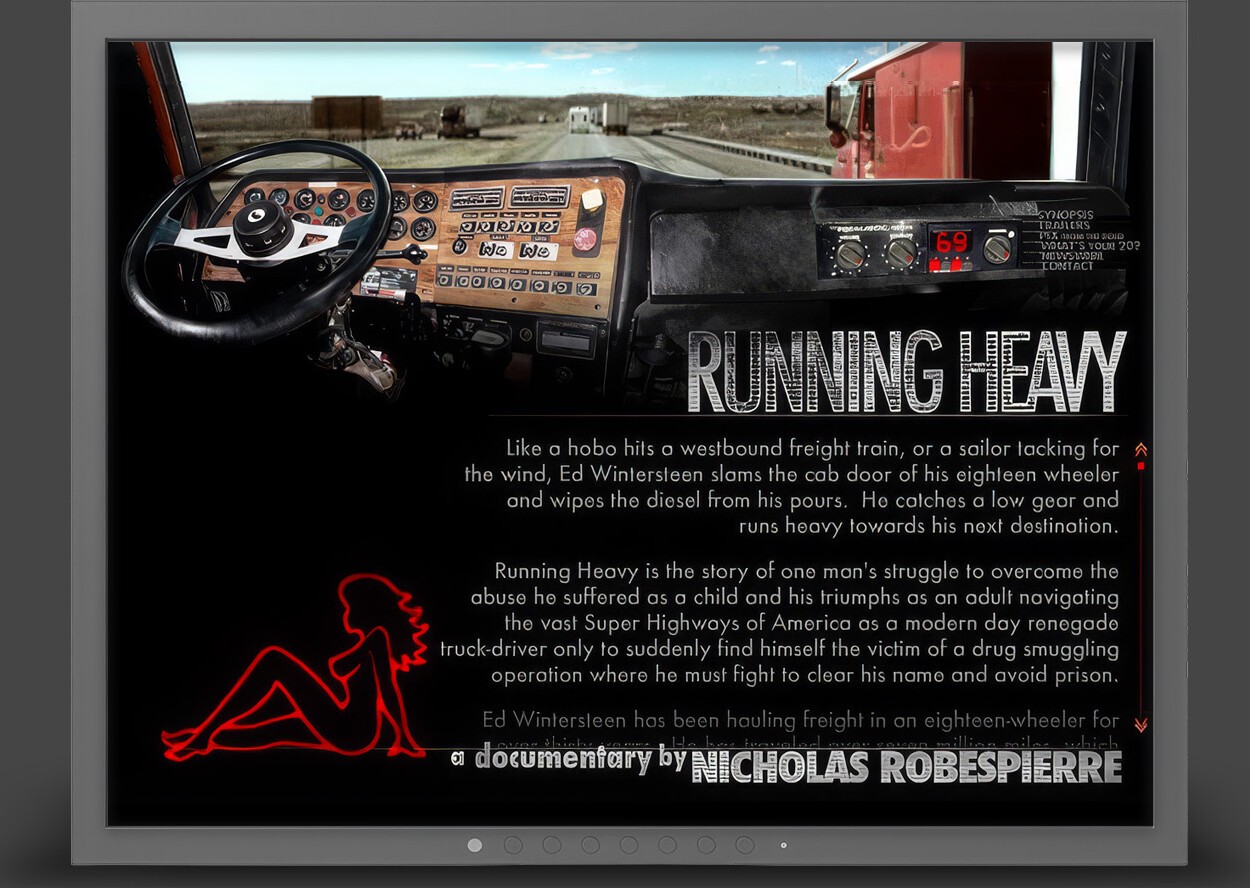
— Breaker one-nine, what’s this Running Heavy site? Come back. You load runningheavy.com, you’re sitting in the rig: wood-grain dash, gauges, chrome wheel, windshield full of highway. Synopsis, trailers, pix from the road — all laid out on the dashboard.
— Heard there’s a radio in there. Roger. A Realistic-brand CB, fully interactive, playing real recordings of truckers cracking jokes on the open road. Flip channels and you’d catch the police band too. Nobody told you it was there. You found it, or you didn’t.
— And the gal on the mudflap? Airbrushed from scratch, chrome and neon. Every truck-stop version is a badly re-traced ghost of the original — this one was rebuilt to ignite the passion that made her so impactful forty years ago. Ten-four.
Interface: the cab. Wood-grain dash, gauges, chrome wheel, windshield full of highway.
Navigation: the dashboard itself — synopsis, trailers, pix from the road.
Easter egg: a Realistic-brand CB, fully interactive, playing real road recordings. Flip channels for the police band.
Instructions for the CB: none. You found it or you didn't.
Mudflap girl: airbrushed from scratch, chrome and neon — not traced.
Service life: 2007 to at least 2022.
Craft notes
This is 2007 Flash-era web design at full commitment: the interface as diegetic object. No generic template with a trailer embed — a place, with an easter egg that rewarded the kind of person who fiddles with radios. The mudflap girl is the tell: where most sites would clip-art her, this one treated her as American folk iconography deserving a from-scratch repaint.
This sits between the studio’s two other interactive commissions of the era — the David Blaine site the year before, and Lonneke Engel three years later, which answered the opposite brief: not a place to inhabit, but a white room with nothing in it but painted icons.
Unapologetic specificity, per the manifesto — a willingness to confuse before it comforts. No instructions on the CB. Attention matters; the site trusted yours.
Fate: the film appears never to have been released — no IMDb entry exists. The site outlived it by fifteen years, holding its corner of the web until at least 2022. Robespierre went on to produce music content for RCA Records (Tyler Childers, Foo Fighters). The last of the cowboys, indeed.
Record: the site is down, the film was never released, and this page claims neither — proof: [] is the honest setting. What is verifiable is the craft above: a dashboard, a working CB, and a mudflap girl repainted from scratch rather than traced.