



Silver Nickel: Whistleblower
Summer Slow Jams 2019
- Role
- Game design & engineering
- Target
- A jam game for the edutainment brief that actually teaches something — genuine beginner operational security, delivered as a point-and-click puzzle rather than a lecture
- Constraints
- August 2019 · Summer Slow Jams, theme Edutainment Games · browser-playable with no install and no account · every icon on the desktop had to model a real channel with a real threat model, or the lesson would be a lie
- Force fielded
- Nick Charney Kaye — game design and engineering; Phaser for the engine, Inkscape for the art
- Time-to-dispatch
- Built for the jam and shipped in August 2019; playable in the browser continuously since
- Result
- A shipped OPSEC puzzle adventure — playable free in the browser — in which every choice about an incriminating file is a lesson in metadata, retention and who is watching
- Principal
- Outright Mental (self-directed — Summer Slow Jams 2019)
Summer Slow Jams, August 2019. Theme: Edutainment Games — the deliberately unfashionable genre where the game has to actually teach you something and still be worth playing. We took the assignment literally and built a lesson in operational security you can play in your browser right now. Phaser for the engine, Inkscape for the art, two-and-a-half tones of grayscale for the mood.
The setup
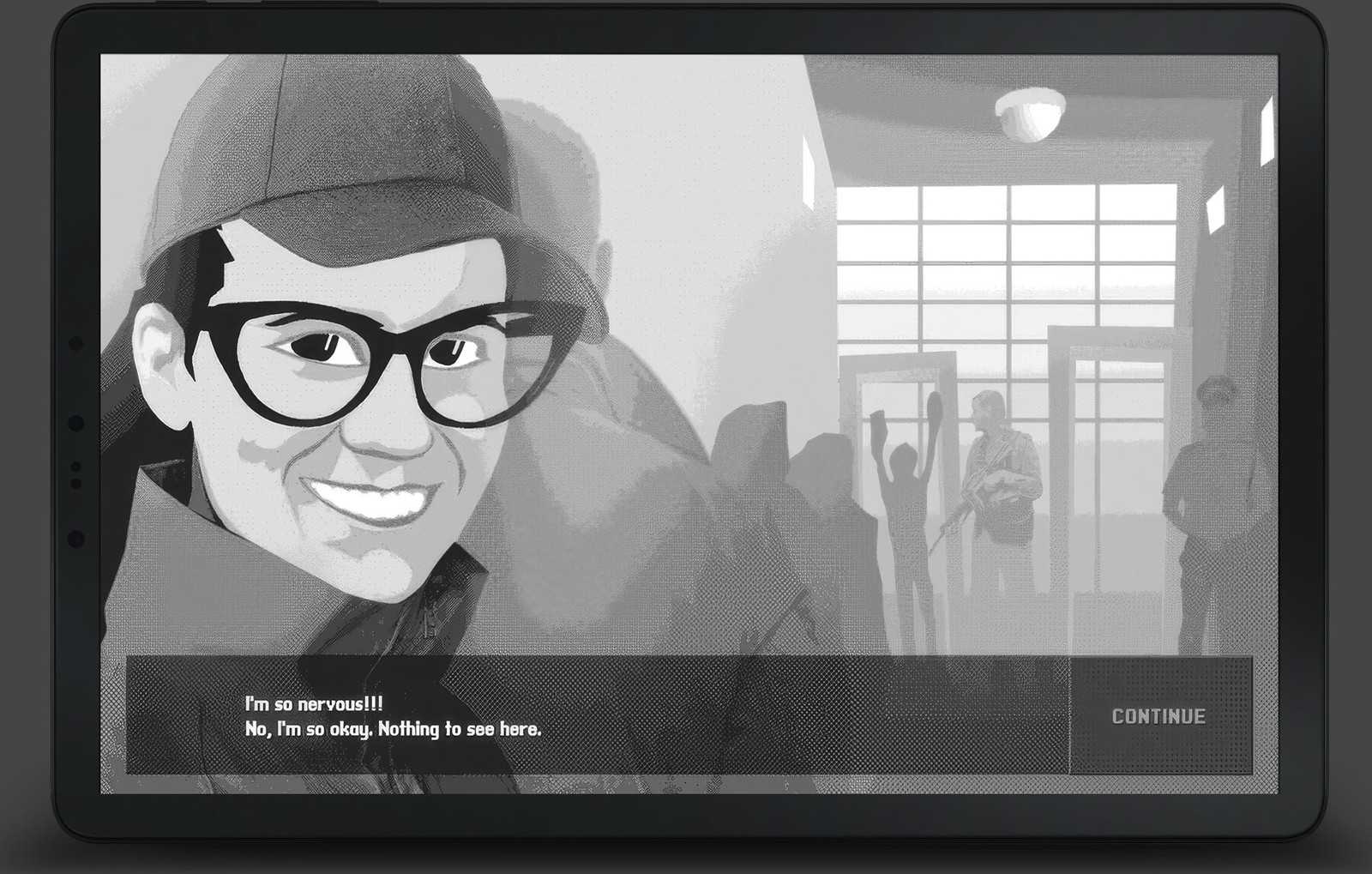
Before it was lost to time for unknown reasons, the ancient civilization of Atlantis had advanced all the way to the information age — and, as in any information age, its bulk surveillance systems were quietly collecting data about everything everyone did. It’s 7:30 pm on a Friday and you are Emily, stuck at her desk in the compliance department at Foodcorp, under the seal of the Food Health Administration, United Provinces of Atlantis.
Then the Boss video-calls: “Hey Emily, what’s up with the Foodcorp approval!?” On your desktop sits NewChemical.doc — a new food additive promising More production, Lower costs, and, in the same bullet list, Don’t Ask Questions. Approve this Immediately! The illustration attached to the memo is a small animal lying on its back with its legs in the air. Emily has questions.
Emily's Work Email — send it and it lives on the corporate server forever.
Emily's Small Removable Data Storage Device — moves the file, and the metadata with it.
The World Wide Web — look something up here and the lookup is a record too.
Trash — drag it here and it is not gone.
The Boss — on video call, asking about the approval.
The only instruction: choose what to do with the file.
The lesson hiding in the puzzle
The whole game is a desktop. You have the World Wide Web, Emily’s Work Email, Emily’s Small Removable Data Storage Device, a Trash can, and the incriminating file — and the game asks a deceptively simple question: choose what to do with the file.
That’s the trick. Each icon is a real channel with a real threat model. Email it and it lives on the corporate server forever. Drag it to Trash and it isn’t gone. Move it to the removable drive, look something up on the surveilled Web — every choice is a lesson in metadata, retention, and who’s watching, wearing the costume of a point-and-click adventure. This is genuine beginner OPSEC: the game teaches you how to protect your own digital privacy by making you sweat Emily’s.
The single spot of red in the whole grayscale world is Emily herself, on the title screen — the one human being in a system built to record her.
The manifesto says we’re hackers, and that the work is the courage to look directly and proceed anyway. Surveillance is exactly the reality most software is designed to help you not think about. Silver Nickel points the other way: it makes the watching legible, hands you the controls, and lets you feel what candor costs when the Boss wants the file signed and the questions unasked.
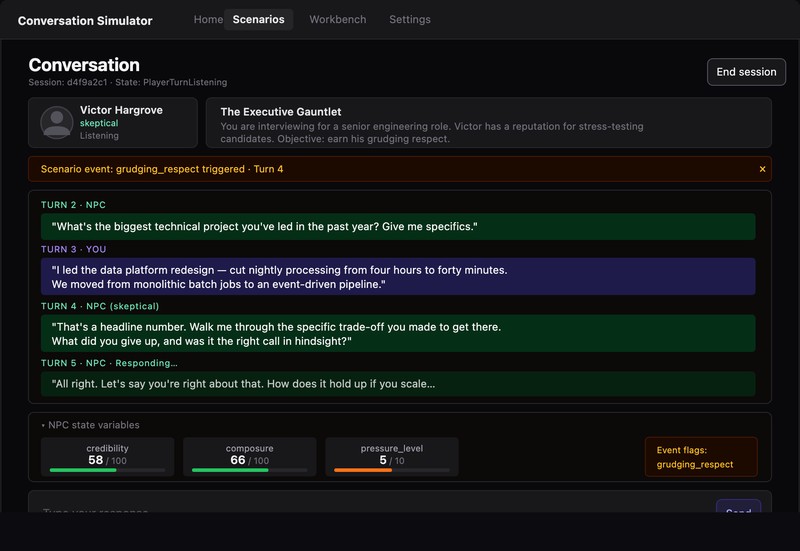
The lineage. The rule that makes Silver Nickel teach — each icon is a real channel with a real threat model, and the game makes the watching legible — is the same pedagogy behind Conversation Simulator’s scenario packs: drop a learner into a situation with real stakes, render the invisible consequences legible, and let them rehearse the consequential choice before it counts. This browser-playable OPSEC lesson is the 2019 proof that the studio has taught through play for years — exactly the evidence an L&D director wants before commissioning a pack. That practice is what the studio’s Conversation Systems line sells today.
Proof: play it · itch.io entry · made for the Summer Slow Jams edutainment edition.